Pages

Showing posts with label writing. Show all posts

Sunday, March 3, 2013

Mentor Text: The Quiet Place

The Quiet Place
Written by Sarah Stewart and Illustrated by David Small
Farrar, Straus and Giroux Books, 2012
   
 Here is a wonderful mentor text entitled The Quiet Place that was published in September 2012 by the husband and wife duo of Sarah Stewart and David Small. Their previous collaborations include:
Here are just a few ideas for how to use The Quiet Place for teaching:
  •  Character who writes
  • Text is presented in a letter format
  • Compare and contrast with The Gardener
  • Inference: think about what the aunt's responses would be
  • Main character - immigrant from Mexico
  • Life Change - How is it dealt with?
  • Writing traits: 
    • voice
    • presentation 
Bonus Link:
Here is a link to a interview with David Small and Sarah Stewart from Reading Rockets. You can also read the transcript for the interview via Reading Rocket's website.  

Saturday, November 3, 2012

Writing Fix - Mentor Texts of the Year 2012-13

     Northern Nevada Writing Project has a fantastic writing resource website called Writing Fix. I highly recommend that you bookmark and explore this site. It is an extensive collection of information on Six Traits concepts, mentor texts, journaling, writing prompts, and so much more.


     The mentor texts for the 2012-13 school year have been announced by the staff at Writing Fix. This year, the two books are The Boy Who Loved Words by Roni Schotter and illustrated by Giselle Potter (Schwartz & Wade, 2006) and Vocabulary Unplugged by Alana Morris (Discover Writing Press, 2005).


      The Boy Who Loved Words is a picture book about a boy named Selig who relishes in collecting words. It is a good text to support the trait of word choice during a mentor text lesson as part of a writing workshop session. Schotter's book can also show how to spice up your writing pieces during the revision stage of the writing process. In addition, the text can be used to exemplify how to use context clues to figure out large vocabulary words within a story.

      You can download a PDF Teacher's Guide from Random House for The Boy Who Loved Words.  There is more information available about the book through the Parents' Choice Award Website as well.

        
      Sign up here for the Writing Lesson of the Month email from the Northern Nevada Writing Project/Writing Fix. Interesting lesson ideas for teaching elements and traits of writing. (Some of the lessons deal with music, which would apply better to an older student demographic, but many lessons deal with mentor texts.) 

    You can also read an older post about a previous fall's WritingFix's Mentor Text of the Year by clicking here.

Tuesday, February 7, 2012

Some Suggestions for Mentor Texts to Highlight Voice in Writing

     Our school division is embracing the 6 +1 Traits of Writing. The traits were developed by author Ruth Culham. Currently, our school is focusing on learning more about highlighting the trait of voice. Voice is the way writing comes alive! It sounds like the writer or the main character is sharing his or her story right in person. There's nothing dull or plain about it, and it grabs your interest. It's clear what the author's purpose is with the writing as well. Writing has a great voice when an author adds descriptive vocabulary, gives a story a unique spin, and brings a heartbeat to the writing!

     I've listed a few of my favorite examples to highlight voice in a variety of ways. Please click on the book titles or author names for links to more information about them. :)  


Enemy Pie by Derek Munson 
Told in a first person voice, the story is expressive and there is a honest voice present that kids can identify with. The book has its own website at: http://enemypie.com/blog1/. One of my favorite websites for writing instruction inspiration, Writing Fix, has a lesson where Enemy Pie is used with other traits that are focused on: ideas and organization. You can view it through Williamsburg Regional Library's subscription to Tumblebooks storybooks online. Also, you can watch it being read aloud on the Storyline website: http://www.storylineonline.net/


Alice the Fairy  by David Shannon 
Scholastic, who publishes many of Culham's professional resources, has an example voice lesson posted on its website that you can access by clicking here. You can go directly to a three page PDF of mini-charts from Scholastic through this lesson as well. You can show the charts under the document camera, paraphrase them on a larger chart intermingled with class comments about the book, or keep as a growing anchor collection of mini-charts for the classroom. 


This Is Your Life Cycle by Heather Miller 
This book is told in a game show format, "hosted" by Bob Beetle. Miller writes in the voice of Bob, and the author creates a clear, distinctive character that sounds just like you are sitting in the audience. It grabs the attention of the reader and they stay tuned for the whole "episode!" Great texts to connect this story to are Harry Bliss's Diary of a Worm/Spider/Fly trio.


The Night I Followed the Dog By Nina Laden 
This is a first person narrative of an evening of a boy investigating a night in his dog's life, which leads to many surprises! You can read the entire text online through Tumblebooks courtesy of Williamsburg Regional Library.


Thank-You, Mr. Falker by Patricia Polacco - This is a memoir from Polacco's childhood.  Her voice of worry, being upset, and relief as a student who struggled as a reader come out clearly in the word choice throughout the story.  Polocco is a master storyteller because her voice is authentic and knowing. I highly recommend doing an author study on Patricia Polacco. Her texts that are written as memoirs show how everyone has a story to tell and a voice to share. As I say, she "makes the ordinary extraordinary just by writing it down!" 


One Green Apple by Eve Bunting
Bunting wrote this story as an internal conversation spoken by the main character who is trying to find her words and confidence in English. It's an interesting way to look at a book where the main character is literally seeking to find her own voice. Eve Bunting, who is one of my favorite authors to do an author study with students, writes in a distinct style that helps the reader understand this character's perspective in a wonderful way. When she does indeed find her voice, it is clear that she is empowered and has unlocked the power of sharing your own voice.


Nothing Ever Happens on 90th Street by Roni Schotter
In this book, a girl named Eva searches for ideas for writing.  The voices of characters are distinct throughout the book as each gives their advice for Eva about writing. The advice includes ideas such as  to watch around yourself carefully, don't neglect the details, "try to find the poetry in your pudding" (use words in a new way), stretch the truth when needed, and make something happen rather than waiting for it. You can also tie in discussing character traits as each character is distinct in this text. Check out a great guide for a lesson on one of my favorite sources of inspiration for writing lessons. This site is called Writing Fix, and the lesson also features two more traits of discussing ideas and word choice. Scholastic also features a lesson on their teacher resources section of their website.

I will post about more texts that are great for voice and various traits throughout the year, so stay tuned! :)

Sunday, January 1, 2012

Texts That Feature Unusual Animal Relationships


     What child doesn't find some animal interesting? Do you remember the true story about an unusual relationship between a gorilla named Koko and a pet kitty? It was featured in the book Koko's Kitten (Reading Rainbow Book) by Dr. Francine Patterson and Ronald H. Cohn (Scholastic, 1987). Well, there's so many great books that have come out about animal relationships over the past five years that sharing one for a read aloud is easy to do! These texts make for a great way to incorporate comparing and contrasting, as well as great writing springboards. Even the most reluctant readers are intrigued at these unusual relationships. Here are a few of the great titles that you can feature with elementary age students. Whether in K or 5th grade, there's a selection that you can use. These true stories full of real photos act as a great venue for describing acceptance, resiliency, and being adaptable. Your children will be entranced! 

Little Pink Pup by Johanna Kerby (Putnam, 2010)  

     This is a story of a runt pig named Pink who is brought indoors to be taken care of. The mother dachshund of the house, Tink, adopts Pink into her litter. This is great for Kindergarten and first graders. Here's a bonus! You can read it online for FREE via the great website We Give Books. Click here to go directly to that link, and you can share it with your students up on the computer screen or enjoy it at home with your family. :) 


Tarra and Bella: The Elephant and Dog Who Became Best Friends by Carol Buckley (Putnam, 2009)

     Tarra is a elephant resident at a sanctuary in Tennessee. She came there because she is a former circus animal. Bella, a stray yellow lab, sneaks in and Tarra and Bella form a loyal bond that's unbreakable. Their dedication to one another is certainly proven after Bella suffered a serious spinal injury. Tarra doesn't leave Bella's side throughout it all! :) Now that's loyalty! Here's a video where you can learn more about Tarra and Bella.


 Suryia and Roscoe: The True Story of an Unlikely Friendship written by Dr. Bagavan Antle and Thea Feldman with photographs by Barry Bland (Henry Holt, 2011) 

Roscoe, who is a blue tick hound, becomes friends with an orangutan named Suryia who comes to the wildlife preserve for endangered animals in South Carolina. The human like qualities displayed by the orangutan, such as trying to feed Roscoe or standing upright to walk him with a leash, is certainly eye catching to readers. Children feel a connection to the orangutan because of the human like behavior it displays. Check out the video clip to see more about Suryia and Roscoe. They are endearing!


Owen and Mzee: The True Story of a Remarkable Friendship by Isabella Hatkoff, Craig Hatkoff, and Paula Kahumbu with photographs by Peter Greste (Scholastic Press, 2006) 
Owen and Mzee: Language of Friendship by Isabella Hatkoff, Craig Hatkoff, and Paula Kahumbu with photographs by Peter Greste (Scholastic Press, 2007)  
      These two trade books are about a baby hippo named Owen that was separated from his mother in a tsunami in 2004. Owen was adopted by Mzee, a male tortoise that is estimated to be 130 years old. They learned to adapt, communicate, and care for one another. Although their relationship is unconventional, it is amazing. (There are even some board books also from Scholastic to introduce the two creatures to the youngest of readers. :)  
 
      Here's several bonuses for Owen and Mzee. Check out Owen and Mzee's wonderful website that is great for complementing the read aloud of these books. You can share the rebus stories with younger students or view the documentary with older students to extend the adventure of sharing these texts. The site features a video link from an episode of PBS's Between the Lions. 


Friends: True Stories of Extraordinary Animal Friendships by Catherine Thimmesh (Houghton Mifflin, 2011) 
     The text is short in this selection, so it's perfect for pre-K through first grade. Check out a little preview through this video clip:


Unlikely Friendships: 47 Remarkable Stories from the Animal Kingdom by Jennifer Holland (Workman, 2011) - This text may not be a cover to cover read aloud since it is written for adults. However, it is great for sharing some stories and the photos from the book. Older elementary students will enjoy this. I personally own this book and I've shared photos from it with students. Here's a bonus clip about the book:


Enjoy exploring these animal friendly texts with your children!

Wednesday, April 20, 2011

Links for National Poetry Month - Part 2: Teacher Instructional Inspiration and Student Interactives!

     It's hard to believe that April is flying by so quick! Here is a "Part 2" to the collection of poetry links. Remember that poetry is a great, quick jolt of reading and writing during this busy time of year! Enjoy!


Scholastic:


The Miss Rumphius Effect Blog - This well known blog is featuring all current posts as well as previous posts related to "poetry in the classroom."


The Poetry Foundation - This link leads you to their children's portion of their site, although it's all interesting! A special feature is former poet laureate Jack Prelutsky's tips to hear!

PBS for Teachers - Explore the offerings of instructional ideas this portion of the PBS website has to offer in the realm of poetry. This particular link takes you to a fun haiku interactive that can easily be used to launch a lesson as well as let students do independently. On PBS's site for the book character Arthur, his buddy Fern has a section of the site that is kid friendly regarding poetry.
Fern, Arthur's friend, has her own
poetry site on PBS for Kids.
                                               
ReadWriteThink - National Poetry Month is highlighted through a variety of lesson plans that span various grade levels. This site is co-sponsored by the premier literacy associations: The International Reading Association and the National Council of the Teachers of English. Check out some of the student interactives that they have available:


ETTC's Poetry Forms - The Educational Technology Training Center of New Jersey has created fill in templates that can help hold the hands of students as they create various poems with particular themes and topics. This is great if you are having students in the lab or laptop, as well as a language arts work station in the class.


Saturday, February 19, 2011

Mentor Text Highlight: Dark Emperor and Other Poems of the Night Written By: Joyce Sidman and Illustrated By: Nick Allen

     I love adding new mentor texts to my recommendations for teaching! This week in third grade, I highlighted the book Dark Emperor and Other Poems of the Night (Houghton Mifflin Harcourt, 2010) written by Joyce Sidman and illustrated by Nick Allen. Nick Allen's official website highlights this work at Ken Speckle Letterpress. You can preview portions of the text on Google Books. I have my own copy that I am happy to lend out! :) Here is a book preview from publisher Houghton Mifflin Harcourt:


     There are many avenues to take when incorporating this text into a lesson. It's considered a type of "hybrid nonfiction," which means that it explains factual information in a different format besides just straight listings of facts. This book presents facts through hypothetical observations of various nocturnal animals. With my particular lesson, I started out by explaining (with great enthusiasm) how this book had recently was announced as one of the four Newbery Honor Awards for 2010! I also discussed how neat this book was to win an honor because typically the awards go to chapter books, and so it must be pretty special. I talked with the students about how Sidman's author's voice sets a tone for the feel of the text with the preview on the inside flap. I read it with intrigue, and the students and I talked about how she set a vibe and made the reader curious before even reading the table of contents or any of the poems.

     Next, I had the third graders take out their Writer's Sparks Inspiration Notebooks which they received in September.  They opened to a new page in the "Sparks from Reading and Writing" section because it was a time to "read like writers" as author Katie Wood Ray would say. (If you are not familiar with Ray's modern classic professional text Wonderous Words, please come by and check out a school copy in my resource room. It's amazing!)  The students set up their page with a template which was written on chart paper. It consisted of:
  • Title of Poem
  • Facts (this is where they listened like observing scientists)
  • Visualizations (powerful words and phrases that created great imagery as we listened)
  • Still Curious About (questions the students had that still lingered after having their curiosity peaked by the poem)
     As you can see in the photo of the chart below, the example we walked through together was the poem called "Snail at Moonrise." I read it twice, once to allow the poem to soak in their imaginations and visualize the description. The second time, the poem was shown on the overhead camera so the text was there to quote from. Since the students are accustomed to "reading like writers" as this point of the year, they ran with it. It's so rewarding to hear the rich inferential, higher level thinking that these students share with each other in Think-Pair-Shares!  After everyone shared curiosities with neighbors and the classroom, I read the paragraph on the neighboring page. The paragraphs that accompany the poems are true nonfiction sections which dispense facts. Many of their curiosities were satisfied after hearing it. (A few were not, which let to an eager craving to research the questions!)


     You can learn more about the works of this author by viewing Joyce Sidman's official website. She dedicates one of the pages to her website to giving writing advice to young and old!!! Sidman also has a page of "Poem Starters" which are a great source of inspiration for lessons in poetry units in April. Be sure to check it out!

     I have a special spot in my heart for authors who want to share their experiences and wisdom about the writing process. In particular, I think it is so powerful when an adult author speaks in a voice of respect to young authors. In the classroom writing communities we have fostered all school year together, it is so important to tie in messages of encouragement and inspiration!

    For an author study and additional selections, I recommend these titles from Joyce Sidman. She has a distinct style of writing, and you can really hear her style of voice as if she is right there reading the text aloud to you in person! If you click on the titles, you will go to Sidman's excellent teaching guides. They are really worth exploring! 


Saturday, December 18, 2010

National Writing Project: Supporting Teachers to Become Even Better Teachers of Writing!

  Have you ever heard of the National Writing Project? The National Writing Project is a highly respected professional learning opportunity for teachers. There is a network of over 200 sites at various college and university campuses across the United States. Each respective site host a summer institute where teachers work on developing their skills as teachers of writing. Also, teachers develop their personal skills as a writer.


    It is so important for teachers to see themselves as writers who are always developing their own skills in order to continue to develop their instructional writing skills, too. I know that is how I personally feel, and I work with writing instruction for about half of any given school day. If I can model my thinking, sifting, brainstorming, drafting, editing, revising, and sharing, that modeling will lead to more risk taking and confidence building in the students. Like any other subject, students need to be explicitly shown. As we all know, writing can be intimidating! :) The more you practice, the more your voice and crafting abilities grow.  I would say that participating in the NWP was one of the top professional development activities that I have ever been a part of. I highly recommend it!  

     Our local branch of NWP, the Eastern Virginia Writing Project, holds its annual course each summer at William and Mary each summer. I'm a teacher consultant of the EVWP from the summer of 2004, and this participation also makes you a fellow of the NWP. Here is the EVWP's blog link, too. The application is available at their link above, and the six graduate credits and books are paid for, as well as a $100 honorarium. What a deal!

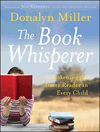
     Donalyn Miller is the author of one of the many books I enjoyed this year, which is called The Book Whisperer: Awakening the Reader in Every Child (Jossey-Bass, 2009.) This link will take you to an insightful interview she gave with the NWP. Also, she was one of the special speakers at the NWP's national convention this year. It is really worth listening to her in this YouTube posting of her speech. We all need to keep the fire and passion about why we teach, and listening to her speak is a great dose of encouragement!


Author Donalyn Miller Speaking at National Writing Project's 2010 Convention

Additional Links Related to the National Writing Project:

Sunday, December 12, 2010

Spilling Ink's First Annual Writing Contest!

      One of my favorite finds in books in June was the book Spilling Ink from Anne Mazer and Ellen Potter. My personal copy is completely bookmarked, tabbed, starred, and sticky noted. Let's just say it's one of my well loved sources of inspiration for my teaching. I also select passages to open my writing lessons in the fifth grade classes that I have visited this year. Like Ralph Fletcher's series written for young authors, Spilling Ink talks TO the students and encourages them to take risks and try!  

     One of the most rewarding things to be a part of is when those students find their voice, and realize that their everyday lives are important and that they do have something to say. I've brainstormed, planned, written, and shared with students stories from my own life, because it is so important to model how to harness the possibilities. Writing is intimidating and vast, and Potter and Mazer know that. One of my sayings is, "You can make the ordinary extraordinary just by writing it down!" I've zoomed in on moments like a flat tire on a road trip, little adventures with my Yorkie Lola, and exploring the Chesapeake Bay as a child. It's about finding the right words to "spice" up your writing, sticking to the subject while elaborating, great leads, and satisfying endings. Mentoring writers is instilling a confidence to experiment and try, and the openness to edit and revise to polish and give writing the proper structure to make it shine.

      If you are a 3-5 grade teacher, you could post this link on your Edline and encourage students to write over the holidays. If they choose to enter, they can do so by following the entry directions here.

      Spilling Ink's First Short Story Contest!

      You Tube video from authors Anne Mazer and Ellen Potter about their inspiration and a sneak peek at their audio recording. (Thanks to Dr. Denise Johnson for letting me know about this link. :)

      Here is the direct link to Spilling Ink's fun writing inspirations from Mazer and Potter for kids. (Also great for Edline! :)

      I have purchased three copies for MW this fall. Third grade has loved using it as a source of inspiration as well! If you would like to see a copy, come by and I'll show you mine. The students will go above and beyond on writing if we keep nurturing their voice and applauding their efforts. Both structure and testing demands can be taught in partnership with the teachings of authors Mazer, Potter, and Fletcher. (I'll post more about Fletcher in an upcoming post. :) Keep an open mind, keep capturing, and keep taking good risks with your writing with the kids. :) The kids learn best from their mentors - real authors and really great teachers like you!

Wednesday, December 8, 2010

Anchor Charts for Our Writer's Sparks Notebooks!

Developed by Wendy Melzer

          
     These anchor charts are located in all of the fifth and third grade classes as a support reference to guide the use of the Writer's Sparks Notebooks that I created for these grade levels to use. Thank-you to all of the fifth and third grade teachers for their openness in incorporating this idea this year and applying their own creativity in using the writer's notebooks. I get so excited when the kids are motivated, curious, or proud of something they've written! Keep up the AMAZING work! :)  

Developed by Wendy Melzer

Sunday, November 28, 2010

Writing Teacher David Stoner's Great Collection of Inspiration for You!

      Hi MW! This is a writing site that you MUST save to your "favorites" and bookmark on your computer! It doesn't matter your grade or years of experience. :) There is something for everyone on this site that was created by teacher David Stoner. He is the co-director of Indiana University Southeast Writing Project. Stoner is truly passionate about sharing his knowledge and experiences on best practices in writing with other educators.

David Stoner: http://zzwriter.com/

Here are just a few examples of the many lessons and inspirations that you can unearth on this site:
      Stoner recently revamped and updated his site. I still find interesting sparks on the site, and it's been a "favorite" for awhile. :) Enjoy exploring!

Friday, October 15, 2010

Website for Inspiration: Writing Fix's 2010-11 Writing Mentor Texts of the Year

      This year, WritingFix's writing mentor texts of the year are based on the theme of writer's notebooks.  Marissa Moss, of the well known Amelia series, shows a kid rendition of notebooks in a trade book format. There are currently over 15 books in the Amelia series. She also did a spin-off with a boy as the main character named Max. In addition to her realistic and humorous Amelia and Max books, she has written a few historical fiction journals such as the colonial Emma's Journal, as well as others occurring in pioneer times, during the Great Depression, as an immigrant to America, and even Ancient Rome. 


Writing Fix - from the Northern Nevada Writing Project:
Writing Mentor Texts of the Year Main Page


In addition to compliment this year's feature:

Here is Marissa Moss's website link, which is very kid friendly:
http://www.marissamoss.com/

Marissa's blog about writing is located at this site:
 http://www.marissamoss.com/comic.php

Some inspiration for planning with Marissa's books are available on this page of her website:
http://www.marissamoss.com/teacherinfo.php

Other trade books that compliment this format are Three Days on a River in a Red Canoe by Vera B. Williams and Dilly's Summer Diary by Cynthia C. Lewis.

Quick Link Tip: WritingFix's Writing Prompt Generator

      WritingFix, from the Northern Nevada Writing Project, is a fantastic site with a wealth of information on blending best practices with practical planning inspiration. This link takes you directly to its "Random Writing Prompt Generator." Just click on the button until you find a prompt you like for a quick write activity when you need a source for a new writing idea or two. :) 

WritingFix's Random Writing Prompt Generator
http://writingfix.com/classroom_tools/dailypromptgenerator.htm

Monday, October 11, 2010

Fifth and Third Grade Writer's Sparks Notebooks Launched!

      It's been a busy start to writing this year! Currently, I am coming in to all of the third and fifth grade classrooms as part of my literacy coaching. Third graders have analyzed mentor texts in order to start the process of the collection of interesting vocabulary, rich language, ways the author "showed, not told," and writing idea inspirations. Fifth graders have heard and discussed excepts from Spilling Ink as our current mentor text, with Ralph Fletcher's work as a mentor in future lessons.


      By the end of the week, all third and fifth graders will have received their own writing sparks ideas notebook! A huge thank-you goes out to Michelle Ybarra for constructing the third grade's set of notebooks. She did a wonderful job of helping! During some of the coaching lessons, there will now be times where students collect language or generate ideas. Teachers will incorporate opportunities to use of the notebooks as well. Sections include: 

  • Sparks from Reading and Writing
  • Real Life and Observation Sparks
  • Imagination and Fantasy Sparks
  • Descriptive Words and Phrases - Words to Add Spice to My Writing
  • "In Other Words" - Fresh Ways of Saying the Same Old Thing
  • Character Names and Character Traits That Interest Me
  • Settings I Could Use - Time Frames and Places

        We want the students to feel empowered to use elaboration, word variation, construct strong leads and satisfying endings. These experiences enrich their writing that they create during writing workshop. Of course, students need to be able to respond to a provided prompt for Benchmark and SOL writing pieces. All students will have ample opportunities to practice prompt responding both with their classroom teacher's instruction, as well as with my instruction. We will continue to develop proper paragraph structure through practice with both myself and the classroom teachers by going through the POWERS writing process. 

       I would like to thank all of the teachers for their openness to a different perspective as I come to classes. Matthew Whaley's classroom teachers are wonderful to collaborate and coach with!